
Jj Wang invited to moderate a panel on "Shipping Finance and the Repricing of Risk" in Hamburg on September 1st
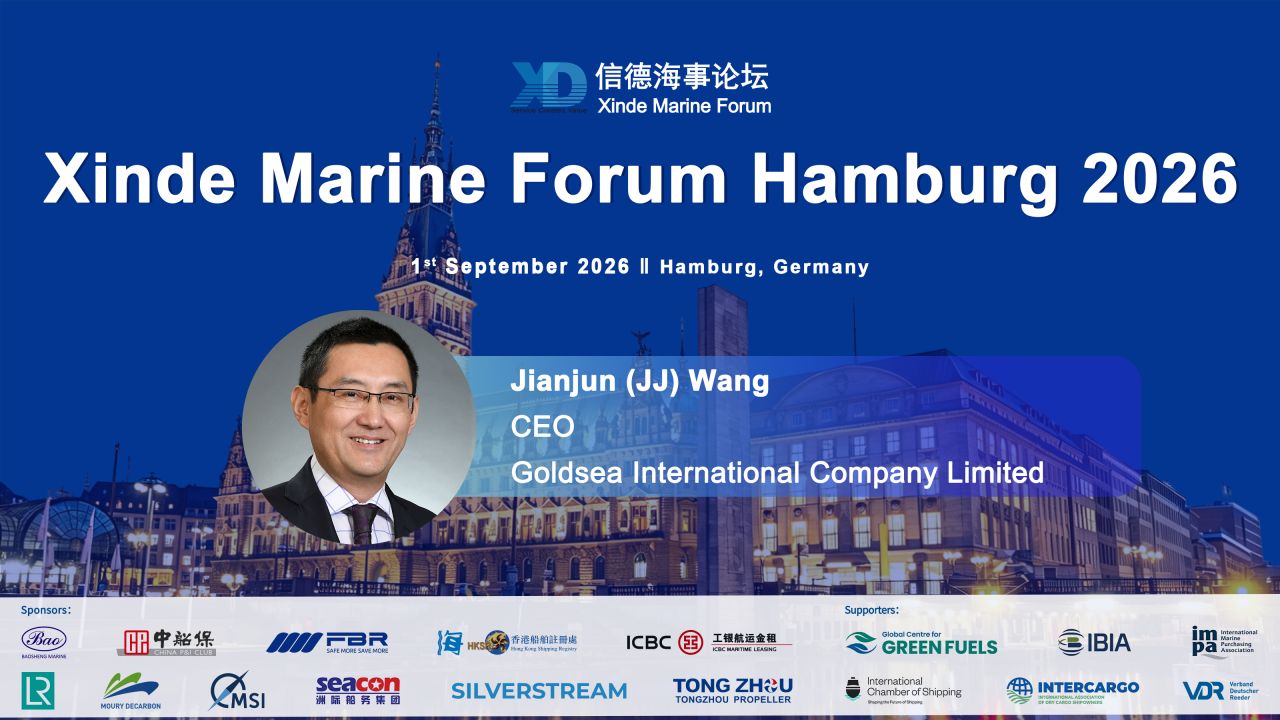
Recently, leveraging our deep-rooted expertise and industry influence in the shipping sector, Mr. Jianjun Wang, President of Goldseaint, has been invited to moderate a panel discussion on “Shipping Finance and the Repricing of Risk” in Hamburg on September 1st. This topic represents a core issue currently facing the global shipping industry. As geopolitical conflicts, new environmental regulations, and trade protectionism intertwine, the shipping industry is shifting from being traditionally driven by “supply-demand fundamentals” to being driven by “risk pricing.”
1. Geopolitics Reshapes Shipping Routes and Asset Security
Geopolitical conflicts (such as the situations in the Strait of Hormuz and the Red Sea) are internalizing war risks as a core variable in shipping pricing.
- Soaring Freight and Insurance Rates: Obstruction of key waterways leads to vessel diversions and longer voyages, directly pushing up freight rates. Meanwhile, war risk insurance premiums have been significantly increased (with some premiums rising by 50%), directly eroding voyage profits and altering the cost structure of vessels.
- Revaluation of Vessel Assets: In times of crisis, vessel assets are no longer merely commercial tools but have transformed into the foundation for ensuring the security of supply chains for critical materials. Enterprises with compliant tonnage, direct routes, and global operational networks are seeing a higher strategic premium on their vessel assets.
2. Risk Hedging and Innovation in Shipping Finance
In the face of the industry’s long-cycle, high-risk characteristics, shipping finance is helping companies balance risk and development through various instruments:
- Derivatives for Hedging: Derivatives markets such as shipping index futures and Forward Freight Agreements (FFAs) are playing a crucial role. By participating in derivatives trading, companies can effectively hedge against price risks caused by freight volatility and geopolitical events.
- Comprehensive Upgrade of Insurance Products: Traditional hull and cargo insurance are upgrading towards “full lifecycle management” and “dynamic pricing.” For instance, by incorporating voyage data into actuarial models using big data and blockchain technology to achieve dynamic premium adjustments. Simultaneously, innovative insurance products are continuously emerging to cover new risks such as cybersecurity for smart ships and carbon emissions.
- Exploration of Green and Carbon Finance: As new environmental regulations accelerate the phase-out of older vessel types, the demand for green ship financing is surging. Innovative financial instruments like vessel carbon asset pledge financing and carbon allowance trading are providing financial support for the shipping industry’s low-carbon transition.
3. Addressing Gaps in China’s Domestic Shipping Finance System
Despite the large scale of China’s shipping industry, it still faces shortcomings in the field of shipping finance, such as insufficient international competitiveness and an imperfect standard system. Future breakthroughs will include:
- Top-level Design and Policy Support: Establishing a national-level reinsurance support mechanism and risk compensation mechanism, and setting up shipping industry investment funds to guide social capital participation with low-cost, long-term capital.
- RMB Internationalization and Settlement Facilitation: Promoting the use of cross-border RMB in shipping financing and settlement, and improving supporting policies such as cross-border cash pools to reduce exchange rate risks for Chinese-funded enterprises.
- Unified Standards and Ecosystem Development: Accelerating the establishment of a green shipping standard certification system aligned with international practices to address blind spots for financial institutions in evaluating technology routes and asset residual values, and promoting the unification of shipping ESG standards.
In summary, current shipping finance is no longer just about capital (financing), but is deeply integrated into a complex ecosystem of geopolitical games, green transition, and risk hedging. Those who can better utilize financial instruments to hedge against uncertainty will seize the initiative in the new round of industry reshuffling.
This invitation to moderate a forum in Hamburg is a significant opportunity for Goldseaint to deeply engage in international maritime exchanges and expand overseas cooperation channels. Going forward, Goldseaint will continue to (deeply cultivate) the shipping market, actively participate in various international industry exchange events, take the initiative to voice its perspectives, deepen cooperation, and continuously showcase the vitality of China’s shipping market to the world.
About Goldsea International
Goldseaint International Limited (referred to as “Goldseaint”) is a professional consulting firm specializing in newbuilding, ship sale and purchase, shipping finance consultancy, chartering, ship design, shipping market intelligence, ship digitalization, and model ship services. The Goldseaint expert team possesses decades of extensive experience deeply rooted in the shipping and offshore markets of mainland China, Hong Kong, South Korea, Singapore, and the UK. For more details, please visit our official website http://www.goldseaint.com.